Weekly variety goal
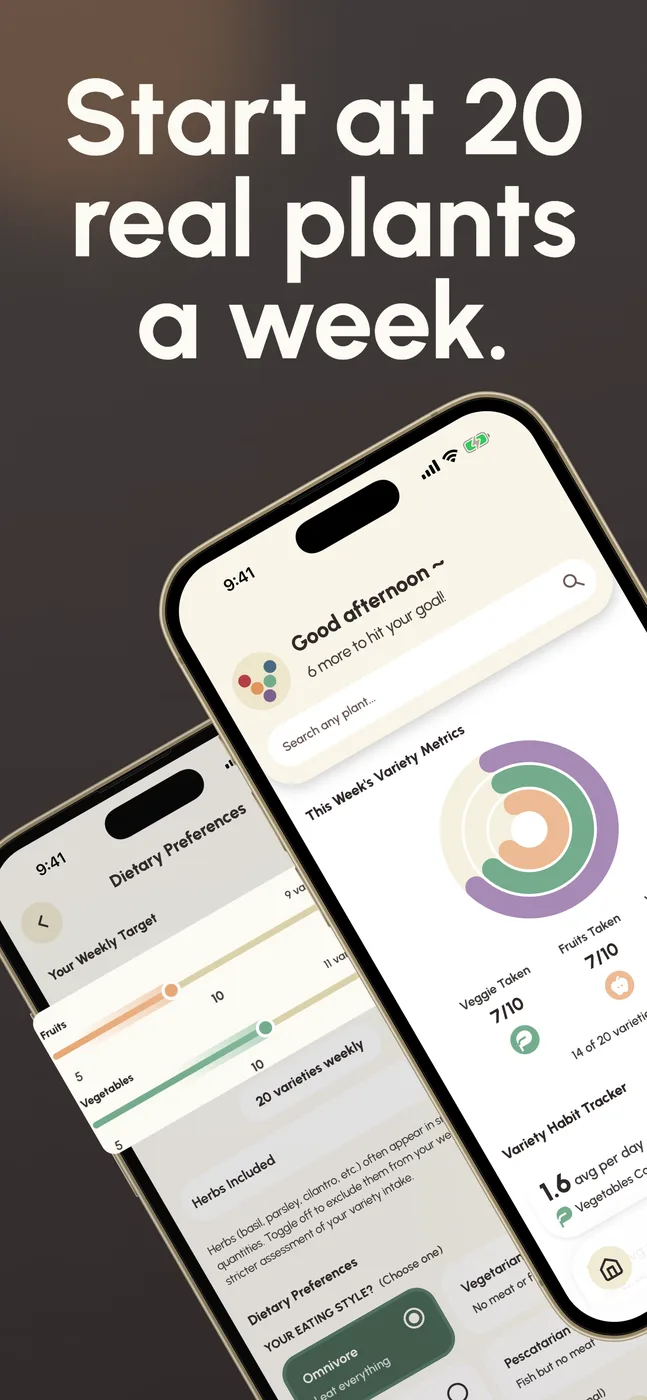
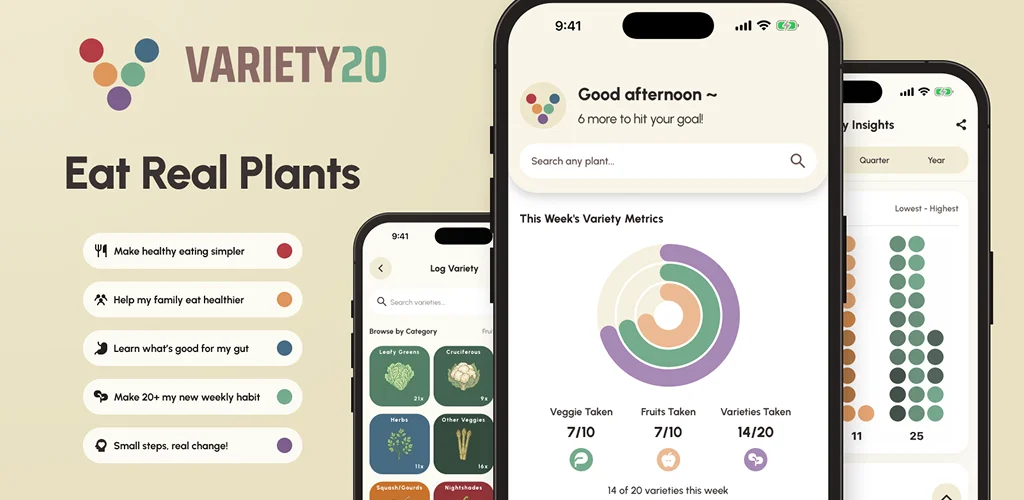
A clear target: 20 unique plant varieties between Monday and Sunday. A progress bar, a celebration at twenty, and a streak when you keep it up.
We're building AI-powered dietary variety tracking — a mobile app that helps people eat a wider range of plants each week to support gut health and microbiome diversity. Currently in active development for iOS and Android in New Zealand and Australia.
About
Variety 20 Limited is a New Zealand registered company building a consumer mobile application focused on dietary variety. Our work is grounded in peer-reviewed nutrition research — in particular the American Gut Project and Tim Spector's microbiome work — which links the diversity of plants in a person's diet to the diversity of their gut microbiome, and to broader markers of metabolic and immune health.
Most nutrition apps count calories or macros. We count varieties. The goal is simple, science-backed, and easy to act on: twenty different plants a week. Fruit, vegetables, herbs, legumes, grains, nuts and seeds all count. Each variety counts once. We make the logging fast, the science approachable, and the progress visible.
The app is being designed and built in Auckland for an initial release across New Zealand and Australia, with multilingual support for English, te reo Māori and Chinese food names so it serves Aotearoa's actual population, not a generic one.
Product
Variety 20 is a focused tracker, not another all-purpose nutrition app. You log what you eat, the app counts unique plants for the week, and a dashboard shows you where you're consistent and where you're missing entire categories. Everything else — photo recognition, voice logging, bilingual food names — exists to make the core loop frictionless.
A clear target: 20 unique plant varieties between Monday and Sunday. A progress bar, a celebration at twenty, and a streak when you keep it up.
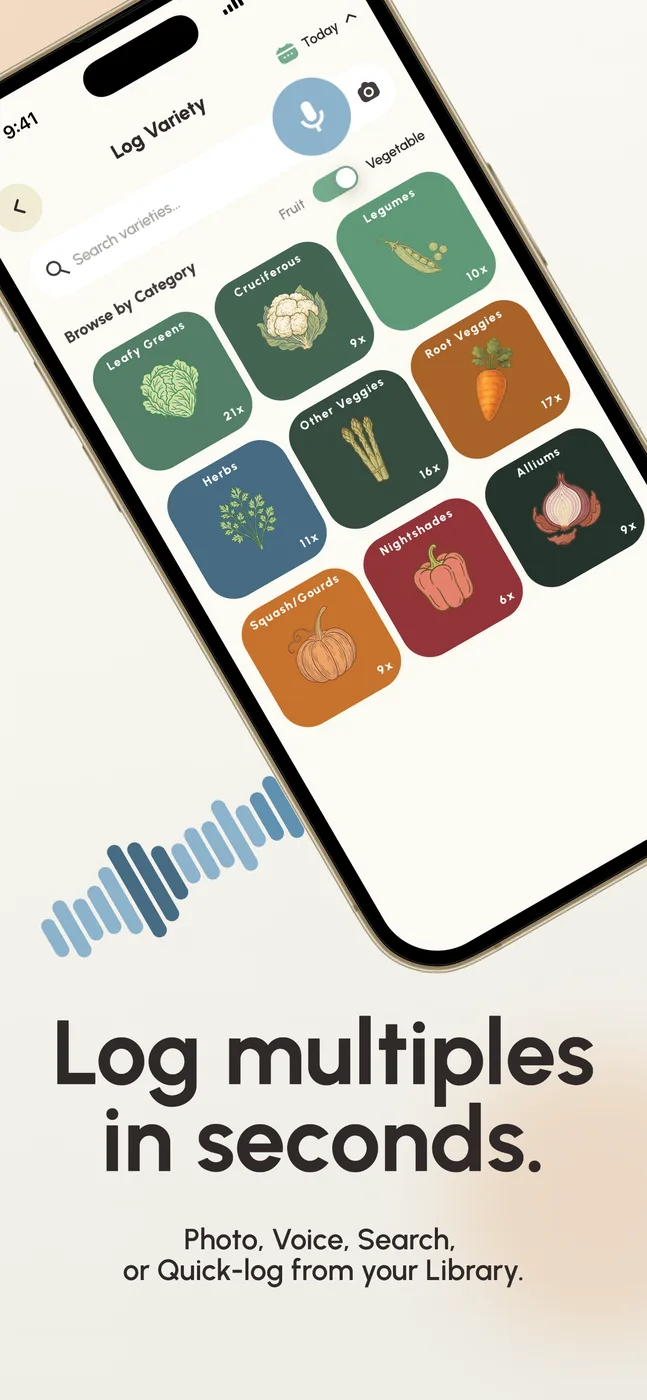
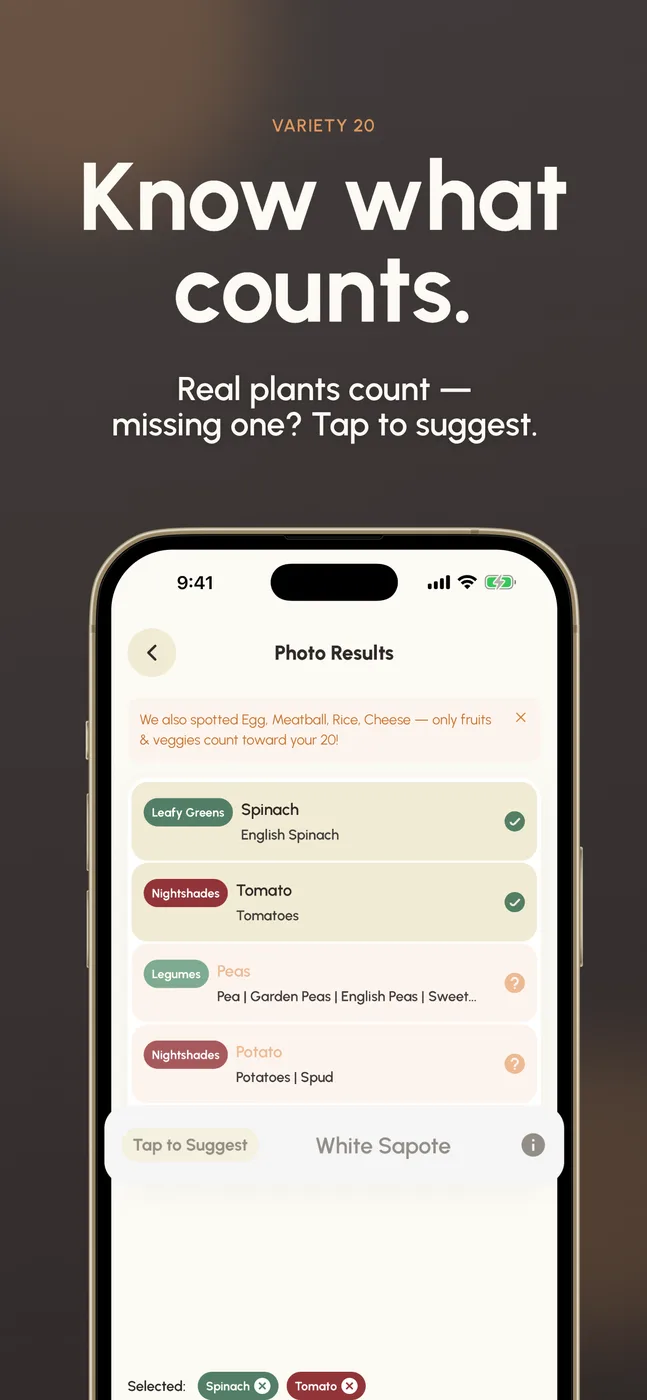
Log a meal by snapping a photo, speaking the ingredients, or typing. AI handles the recognition; you stay in flow.
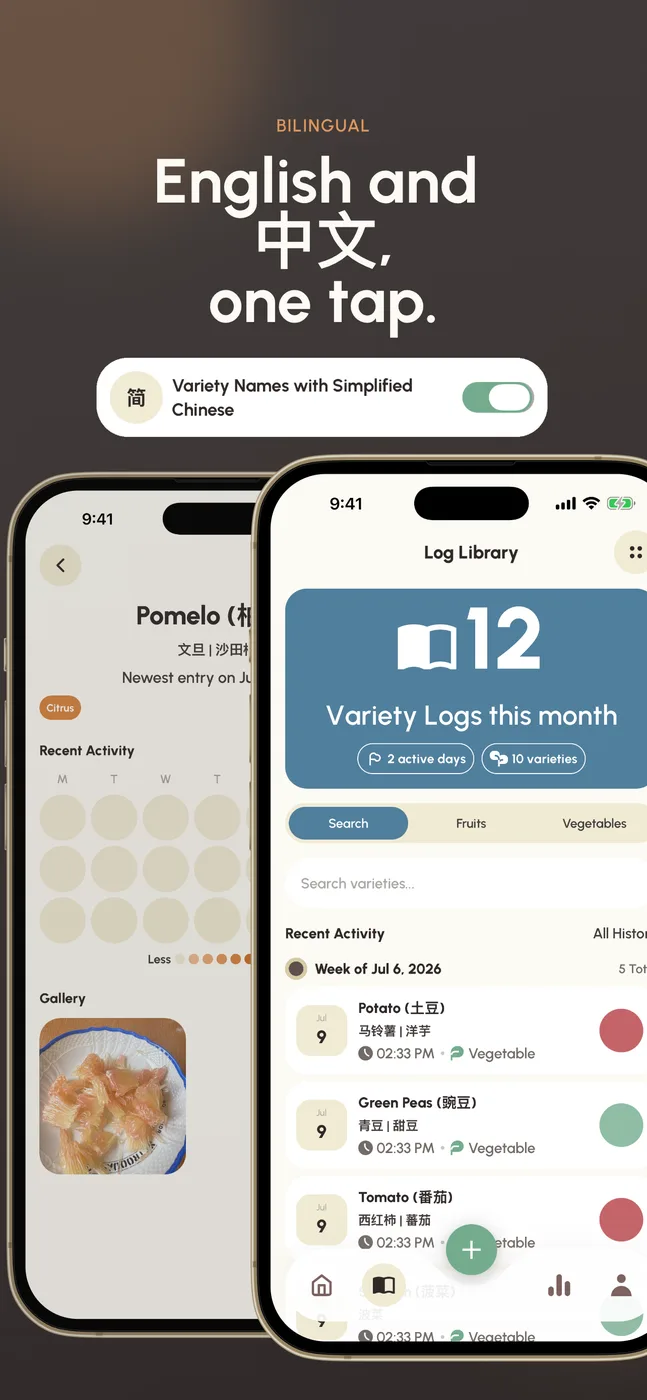
Foods are stored with English, te reo Māori and Simplified Chinese names. Kūmara, choy sum and feijoa all recognised — not just iceberg lettuce.
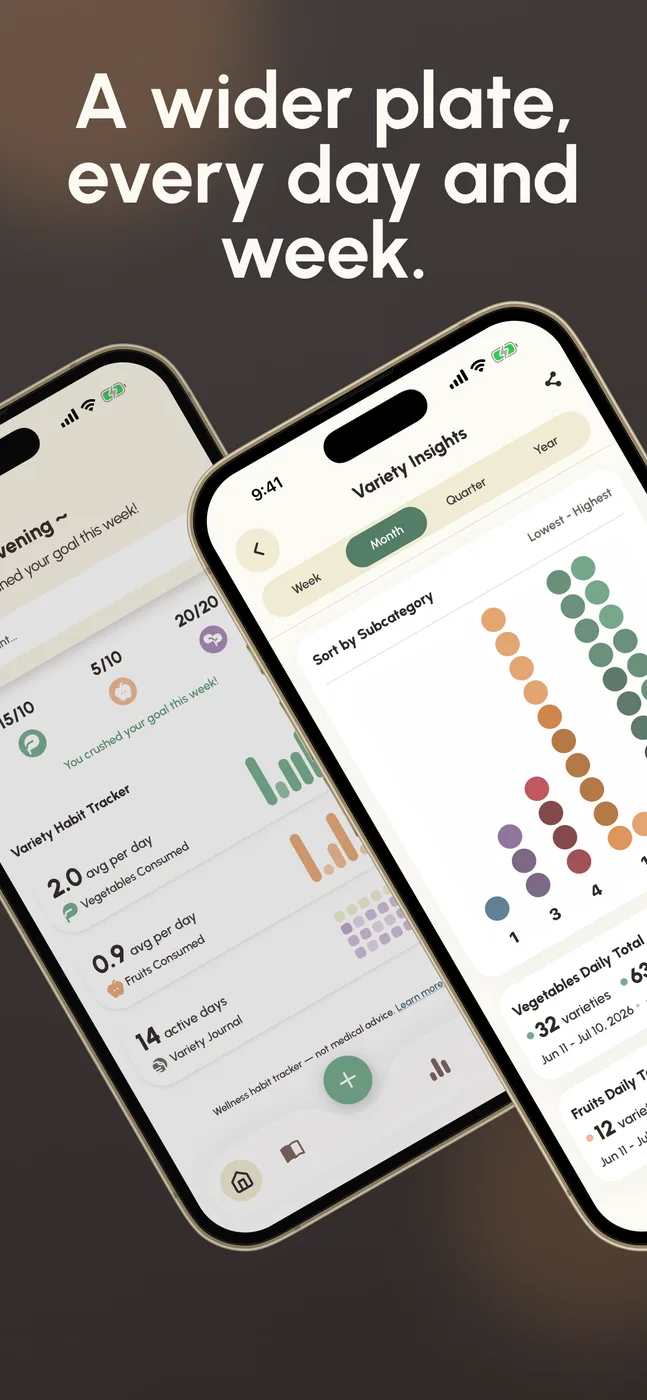
See your weekly count, category distribution, and the gaps. "You haven't logged any citrus this month" beats a wall of numbers.
Your past logs become a personal pantry. Re-log a familiar week of meals in a few taps instead of starting over.
Local-first storage, optional cloud sync, photos deleted within 24 hours of AI processing, no selling of personal data. Ever.
Why twenty
The American Gut Project, the largest crowdsourced microbiome study published to date, found that people eating thirty or more different plants per week had measurably more diverse gut microbiomes than those eating ten or fewer. Tim Spector and the ZOE research group have since linked that diversity to better metabolic, immune and mental-health markers. We picked twenty as an achievable, daily-life entry point — not the ceiling — with the app gently encouraging users beyond it once the habit lands.
Plants per week linked to the most diverse gut microbiomes in the American Gut Project
Our weekly target — an achievable entry point that still moves the needle
Of immune-system function is associated with the gut microbiome
Languages supported at launch: English, te reo Māori and Chinese
Team
Variety 20 is a privately-held New Zealand company. The team is small and operating in build mode — a working group of product, design and engineering people based in Auckland, supported by independent collaborators across data, content and te reo Māori translation.
Every claim in the app traces back to peer-reviewed research. No fad diets, no detoxes, no calorie scolding.
Kūmara, feijoa, choy sum and kawakawa are first-class citizens — not after-thoughts squeezed into a US food database.
If logging a meal takes longer than eating it, we've failed. Three taps is the bar.
Local-first storage, no ad networks, no data sales. Your food log is yours.
Contact
We read everything sent to these inboxes — development feedback, support questions, privacy enquiries, partnership ideas, or just a hello. Use whichever address matches what you'd like to discuss; we'll route it if you pick the wrong one.
Response time is typically within two business days (NZST). For data-rights requests under the New Zealand Privacy Act 2020, see our Privacy Policy.